Monday, December 12, 2011

The Language Barrier


Yes, this is my school!
It's the last week of classes before winter break and I can hardly force myself to believe the first semester is done. Typically that would mean I would be sitting through final exams here and there, from time to time, throughout the week. But as a master's student in the UK I no longer take tests.

WHAT?

You heard me. Instead, we write literature reviews on highly specific topics related to our majors. (I approve of this method, by the way.) I, for instance, am doing one paper on the potential role of omega-3 fatty acids in neurodegenerative conditions at the moment, followed by a discussion on the aetiology of obesity and possible treatment strategies, followed by an analysis of the current research being done on the inflammatory markers of obesity and how they are influenced by exercise. Interested? Well, thankfully you all don't have to be. Only me.

And this is the same building, different angle.
The education system is markedly different over here. Besides the mere elimination of final exams at my level, the grading system is completely new to me. In fact, it's so unusual I can't even begin to describe it because I don't understand a bit of it, myself. All I know is that they rarely give out high grades; you actually have to earn upper-level percentages, grade-wise. How original! Meaning, most people end up with mere passing grades, but this is acceptable and common. In this way, I think of the grading system simply in terms of pass/fail instead of A,B,C etc (which they don't have) or percentages. As long as I pass, I'm satisfied, they're satisfied, we're all satisfied. And life is good.

The courtyard in Whitelands College

Stairs to classrooms, Whitelands
In every class, every week, attendance is taken. But instead of calling out names an attendance sheet is passed around and you have initial it. And it isn't called 'taking attendance', it's called 'signing the register'.

Even more unusual is the fact that a slew of different teachers, called lecturers and not teachers, teach for the same class from week to week. They rotate, I guess you could say. However, they tend to overlap/cross-teach a bunch of courses...so when a teacher sends out a vague email pertaining to an unspecified class you have no idea which class to which he/she is referring. Any of you who are friends with me on facebook have probably noticed my complaints on the matter. In the end, though, this teacher-rotation isn't all bad because then each class becomes very specialized and detailed in accordance with that lecturer's own strengths. Plus, in the case you happen to not like a specific lecturer, you know it'll only last a week and then the following week a new lecturer will take the podium. Thankfully, I really like all my lecturers. And I think that may be a first. Of ALL the 11 schools, this one is the only one where I really, actually like every speaker. Yes, even Cambridge had one I wasn't so crazy about. Hm, wild. 

Classroom and computer lab hallway, first floor
Classes are called modules or courses, not classes. And I only have one day a week of classes. The rest is meant to be for singular study and writing, ideally. However, I think we all know I've spent far more time out in the city up until now when things are nearing their due dates. Hence all the blogs about things I've done off-campus.

Roehampton University is split up between two campuses.
Mine is call Whitelands and is the smaller of the two, and admittedly not the prettier of the two.
The following is a Panorama, of sorts, inside the boundary wall of Whitelands Campus.
(going clockwise)
Standing at the Main Gate, looking toward the front door
front door is just out of view on the left
The Main Gate is just to the right, now.
-The Main Gate would be here-

My room = top row, very center of the photo, gate is to the left

Left of the front door is the chapel
Capel, then the front door is on the right


HOWEVER, if you walk past the chapel to the opposite side of Whitelands...


Then you find the prettier side of Whitelands!

...And close-up. Nicer than its backside, I have to admit!

In class, in particular, I notice differences in language in both pronunciation and word choice. And I say particularly in class because, like a good student, I sit quietly and listen and absorb what I hear. These are a few:

A wider view, in watercolor

US vs UK
vitamin (pronounced VITE-amin) = vitamin (pronounced VIT-amin)
elevator = lift
a shot (meaning a vaccine) = a jab
cell (phone) = mobile
ferris wheel = observation wheel
zucchini = courgette
eggplant = aubergine
estrogen = oestrogen (pronounced EEST-ro-gen)
apartment = flat
toilet = loo
trash can = bin
booger = bogey
the cafeteria = the canteen
shopping cart = buggy or trolly
“thanks” = “cheers”
fries (as in french fries) = chips
chips = crisps
high school = college
college = university
elementary school = primary school (pronounced PRIME-ry)
the mail = the post
we say we speak English, but they say we speak American
granola bar = flapjack
football = American Football
soccer = football
people's weight is measured in stones, which is about 7 pounds, I think.
A period (in a sentence) = a full stop
gas (for a car) = petrol
freezer = ice box
a sweater = a jumper
mom = mum
doctor's office = the surgery
sidewalk = pavement
a Band-aid = a plaster
a doorman = a porter
to line up = to queue / a line of people = a queue
raisins = sultanas
to call someone = to ring someone
an eraser = a rubber
to deal with it = to sort it
immediately = straight away
ass = arse
cotton candy = candy floss
parking lot = a car park
an ATM = a cash point
pop/soda = fizzy drink
vacuum = hoover
Popsicle = ice lolly
math = maths
highway = motorway
diaper = nappy
a braid (in hair) = a plait
bar = pub
bacon slices = rashers
backpack = rucksack
a sedan (4-door car) = a saloon
tennis shoes = trainers
“what's up” = “you alright?”, which, to this day always makes me assume I look unwell or depressed. It's a very offsetting greeting, in my opinion.

And finally, for Pat and Jeff, in reference to a game we played way back when:
zero = nought
Z (the letter) = zed
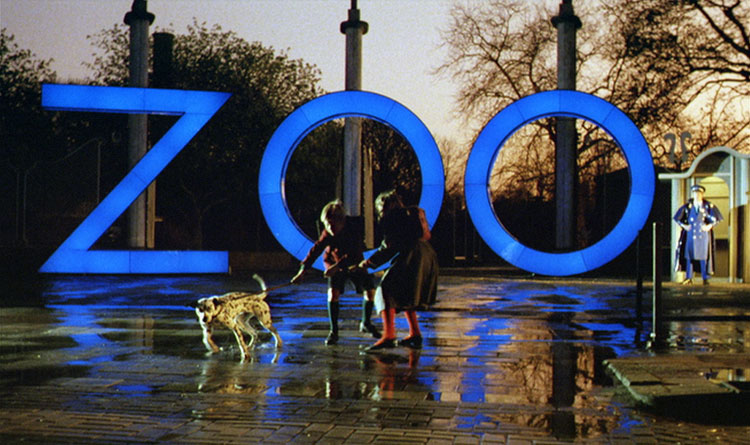
Remember the movie title “A Zed and Two Noughts”? At the time we thought it must have been an alien invasion movie, when in fact it meant Z – O – O . Oh, those crazy British people.


PS. Sorry, but none of these photos are mine. I stole them all. Oddly enough, considering my photo-taking obsessive compulsiveness, I haven't taken any of my own school! For shame, I know. But at least I can blame the washed-out, grainy quality on someone else, then.

Kidding.

Monday, December 5, 2011

What They Do Best

Tea at the Landmark

There are at least three things, for certain, that are truly British: high tea in the afternoon, “opposite” cars, and Sherlock Holmes. None can do high tea more fashionably than London's starred hotels, the navigability of England's roads are infamous, and the Sherlock Holmes Museum on Baker Street dominates the detective's market all on its own. 


It was a leisurely Sunday afternoon in November, one I remember quite vividly anyway because the morning of that same day began with a double migraine, one right after the other. My recoveries from both were swift, however, and that afternoon was basically free of any lingering nauseating head pain. But, playing it safe, we decided a day infused with simplicity would be best in my fragile state.

Spaghetti Junction in Brimingham
For the first time since I'd been in London I got to ride in the front seat of a car, and one that wasn't just a taxi. Sitting in what ought to have been the driver's seat was mildly surreal. I felt as if I ought to be driving, but without the steering wheel in my lap that would've been impossibly difficult. Instead I fiddled with a radio that refused to cooperate the way any normal, American car's radio would work. In fact, it was so utterly confounding I couldn't even got close to unlocking its potential and inner musical abilities. So I went back to eying the road, from time to time, in moments of bravery. 

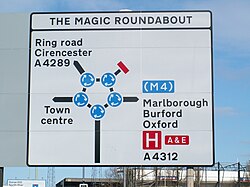
The Magic Roundabout, for occasions when you want to take your life in your hands
From any vantage point, whether it be in the front seat of a BMW, the upper level bench of a double-decker, or the back room of one of the infamous black cabs, watching the traffic is wildly frightening. There's no rhyme nor reason to its madness. Its merely a chaotic jumble of vehicles in a god-forsaken, mad man's race against space and time. 
A mechanical jungle of angry beasts fighting for space at the front of some interlocking, never-ending, twisted line that doesn't actually exist. And it's all backwards! Everything is the opposite of the way it ought to be. In fact, now that I think about it, it sounds very Alice in Wonderland-esque, and I suspect Lewis Carroll may very well have been influenced more by the irrationality of the roads than by drug use.
The Magic Roundabout. Kills everyone in its path.


We abandoned the car in Marylebone and continued on our way as pedestrians. With no destination in mind, we were completely at our leisure and free to wander aimlessly. Yet in our aimlessness we succeeded and, indeed, ended up somewhere; 221b Baker Street, the home of Sherlock Holmes and Doctor Watson. Neither gentleman was at home, but that was to be expected. However, for a few pounds they strangers wander through their Victorian flat for the sake of posterity and in the name of cultural heritage. Surprisingly enough, the house is open every day of the year except Christmas Day, and is constantly guarded by one of Scotland Yard's finest.


The famous study overlooking Baker Street that has been portrayed in so many films over the years is located on the 1st floor...

...and his bedroom is adjoined to it at the rear of the flat. Doctor Watson’s bedroom on the 2nd floor overlooks a small yard at the rear of the house, while Mrs Hudson’s room is at the front. Mrs Hudson was the landlady of the lodging house who prepared meals and undertook household duties for her two famous tenants. 


The third floor exhibit rooms contain a slightly shocking arrangement of wax models of scenes from the stories. 


Since the 1930s, the Royal Mail had been delivering mail addressed to Sherlock Holmes to the Abbey National Bank, and they had employed a special secretary to deal with such correspondence. The museum went through several appeals for such mail to be delivered to it, on the grounds that it was the most appropriate organization to respond to the mail, rather than the bank. Although these initiatives were all unsuccessful, the issue was finally resolved in 2002 when the Abbey National vacated its headquarters after seventy years, and the mail is currently delivered to the museum. 
 
They now keep the letters people send in a scrapbook. This one was my favorite.
Dame Jean Conan Doyle made clear her lack of enthusiasm for the museum when she was asked about it. She was very much against the idea of suggesting that her father's creation was a real person and knew that the presence of the museum would reinforce the idea in the minds of many that Holmes had really existed. This idea was strengthened further by the presence of a commemorative blue plaque on the outside that states the years of Holmes's supposed residency. The plaque is similar in design to those erected by English Heritage but it is not one of theirs, as they only erect plaques to people who have legitimately existed. The Museum did offer Dame Jean the opportunity to create a room in the museum dedicated to her father, but this offer was refused, and since then the last remaining possessions of Sir Arthur Conan Doyle have been sold off at auction.


At the end of Baker Street, to the North, is Regent's Park. I'd visited before on my last visit to London two years ago but it is always worth it to stroll through again. Especially if you need to work up an appetite for afternoon tea. Again, without planning on it, our meandering walk from Regent's Park placed us outside The Landmark Hotel. Desperately in need of nourishment after a whole day of migraine-induced nausea and not-eating, I agreed to a mutual “first experience”. As neither of us had ever experienced high tea time at one of London's finest establishments it practically went without saying that it was time to try it out.

Winter Garden Atrium

Situated at the heart of the soaring eight-story glass roof atrium, the Winter Garden restaurant proudly offers a memorable dining experience. And their award winning Afternoon Tea is the perfect way to enjoy a late afternoon. 
The Chocolate selection

Prepare to indulge in an assortment of sandwiches, freshly baked scones and French pastries as well as a selection of freshly brewed leaf and herbal tea. You can even treat yourself to a selection of mouth watering chocolate delights with their Chocolate Afternoon Tea selection. Allow several hours to fully enjoy the experience and plan on not eating for a day in advance or an entire day following. The food may dainty and artfully crafted but it is, nonetheless, a LOT of food. A lot of delicious food, I might add, though.

The Landmark at night


Monday, November 28, 2011

The Roman Chronicles, Part 3

The Roman Forum


My yearly ritual has begun. That one where I start applying to another school. What will that make this one? School #12. Yes, in total 12, (counting my elementary years, as well...just to clarify). Every year since high school I have either transferred from one school to a different one or have graduated to another level and today I began the process of searching for that next school, the one I'll be going to for the 2012 - ? academic year(s). I'm going to be the next Doctor Grandy! Get ready, UK. The US isn't big enough for multiple Dr. Grandy's. So I'm expanding our territory! But to ensure I'm not setting myself up for a “foot in my mouth” moment, I'm not going to reveal my academic destination. I'll tell you when I've been accepted, how's that for a deal? Letting y'all know this much is all y'all'll get for now.

In the mean time, I'll take a break from the school-related stuff and nonsense and finish up with Part 3 of the Roman Chronicles.

The second day in Rome I woke up with puffy, red eyes that made me look like I had transformed overnight into a 90 year old women, one who spent that night crying until her eyes were swollen shut. Though I suppose if you woke up only to discover you'd aged 66 years in 8 hours you'd be peeved enough to cry, too. Thankfully, my self-consciousness and vanity parted ways and allowed my overwhelming desire to explore a new city take hold.


We met up with Stefania, our guide from the day before, at the site of the ruins of Ancient Rome, the Roman Forum. When you approach from the north you'll see that the ruins are below the ground level of the road. It sits in a small valley between the Palatine and Capitoline Hills. 


Railings circle the perimeter of the giant open space that was once a market and meeting place for civilians and politicians alike, the central point of Roman public life. The Forum was once the heart of Ancient Rome and one of the most celebrated meeting places in history. Today, fragments of that history remains.


Each section and plot of land that archeologists are still excavating is roped off, but you can buy a ticket and walk down into the ruins for a closer look.


As you pass the ticket booth and descend, there is a church on your right hand side which was covered in scaffolding and netting for restorations. The front part of that church, oddly enough, had been completely buried at one time, intentionally, and a whole other level of the church was discovered underground. A complete exhumation of the lower steps and the front of the church revealed a building far more massive than what was exposed for hundreds of years.


Then you've reached the lower ground level and the site for an unbelievable collection of ancient buildings, some of the most important in Roman history. The earliest shrines and temples, including the House of the Vestal Virgins, arches, basilicas, and the House of Senate all sat here together. Due to the Roman practice of building over other ruins and buildings the space is a bit cluttered and is, quite literally, layered in history. And due to the sheer number of of ruins and the depth of history, facts, and names associated with the Forum I'm only going to show you pictures:


 Archaeologists under the Napoleonic regime marked the beginning of clearing the Forum, which was only fully excavated in the early 20th century.


As you walk down the road the Colosseum will rise up in front of you in the distance. Of all the ancient ruins in Rome this one is probably the most famous due to its recent attentions from Hollywood and its feature in gladiator films. However, this elliptical amphitheater truly is a work of genius and more of a masterpiece than anything that has ever or will ever come out of Hollywood. Of course it's always the Emperors who take credit for the creation of these giant buildings and monuments and arches and basilicas, but in my mind at the time we were at the Colosseum I couldn't help but wonder at the mathematical brilliance the architects must have possessed. And the ability to create a solid structure that's lasted this long using manual labor? Unbelievable. How would you even know where to start, where to lay that first block, and how could you coordinate the workers to do it right? How could it even be made by hand and without mortar? How could they know that interlocking bricks at an angle would prove to be more structurally sound and that the tiers or stadium-type seating wouldn't simply collapse under the weight of 50,000 rowdy people? 


The only reason part of it was destroyed was because an earthquake shook it half to death.

The Colosseum is one of Rome's most popular tourist attractions, receiving millions of visitors annually. The effects of pollution and general deterioration over time prompted a major restoration program carried out between 1993 and 2000, at a cost of $19.3m.


We also stopped at the Basilica de Saint Clemente, another example of how Rome built over itself.

Upstairs...

...and Downstairs

See how the ceiling cuts off the top of this fresco? This was the original wall that eventually became the crypt.

One last Michelangelo sighting, his Moses:


Capita Piscium....on the Arch over the Fish Market
And last, the Jewish Quarter and it's ancient fish market along the river. I ran out of photo-storage space on my camera so that's where the pictures stopped, which was unfortunate because we stumbled across a very small set of ruins in one of the squares that was overrun with cats. People couldn't access the level of the ruins below the street but those cats sure could.
The aforementioned fish market arch


All photos, minus the two panoramics, are mine. And just think, there are about 100 more I didn't post!